Cancun Sargassum Forecast 2026: Is This Year Really Better Than 2025?
Last Updated on August 17, 2026 by MeganThe Cancun sargassum forecast 2026 has become increasingly important for travelers after an unusually active season across Quintana Roo. However, statewide collection totals do not reveal current conditions on individual Cancun beaches. Scientific monitoring, ocean currents, daily forecasts, and changing weather patterns provide a much clearer picture.

If you are planning a Cancun vacation, you may have seen some alarming sargassum headlines.
Some reports have called 2026 one of the worst sargassum seasons ever recorded in the Mexican Caribbean. But I challenge these reports because the numbers are being used differently in 2026 than ever before.
Reuters reported that Quintana Roo officials stated that more than 105,000 metric tons had been cleared during 2026. What they did not clearify is Quintana Roo is collecting the sargassum BEFORE it ever gets to our beaches in 2026. So these numbers cannot truly be compared.
According to Brandon Mex Martínez, Director of Special Handling Waste for the Government of Quintana Roo, 104,700 metric tons of sargassum had been collected as of August 12, 2026. Importantly, that total combines sargassum collected in the open sea with sargassum removed from beaches throughout Quintana Roo. It does not mean 104,700 tons washed onto the state's beaches, nor does it describe conditions on any individual Cancun beach.
That number sounds frightening. However, it does not tell travelers what Cancun's beaches look like today.
It also does not mean every beach in Quintana Roo has experienced worse conditions than 2025.
The scientific picture is much more complicated.
What Does the Cancun Sargassum Forecast 2026 Show?
Interestingly, one of the world's leading sargassum research programs provides some important context.
The University of South Florida Optical Oceanography Laboratory monitors floating sargassum throughout the Atlantic and Caribbean using satellites.
Its June 2026 report described 2026 as likely becoming at least the second-largest sargassum year.
However, total June 2026 sargassum remained approximately 10% below the historic 2025 record.
That distinction matters.
Quintana Roo's beach collection numbers have been higher during 2026.
However, collected seaweed and total offshore sargassum are two very different measurements.
More sargassum being collected does not automatically mean every Cancun beach experienced worse conditions.
Collection can also be affected by where sargassum lands, cleanup capacity, barriers, weather, currents, and government response.
2025 Was Already a Historic Sargassum Year
The Mexican Navy reported approximately 92,783 metric tons of sargassum were collected throughout Quintana Roo during 2025.
That was described as a historic season.
Because 2025 was unusually difficult, Mexico entered 2026 with its sargassum response already operating.
Additional barriers, collection vessels, monitoring, and offshore interception have since been deployed.
Therefore, comparisons between annual collection totals require context.
Why Quintana Roo Numbers Can Be Misleading for Cancun Travelers
This may be the most important fact for travelers.
Quintana Roo is not one beach.
The state includes Cancun, Puerto Morelos, Playa del Carmen, Tulum, Mahahual, Xcalak, Isla Mujeres, and other coastal communities.
Sargassum conditions can differ dramatically between these locations.
Even different sections of Cancun can experience different conditions.
Wind direction matters.
Ocean currents matter.
Coastal orientation matters.
Offshore sargassum location matters.
Weather matters.
Conditions can also change quickly.
Therefore, a statewide number should never be interpreted as today's beach condition at a particular Cancun hotel or vacation rental.
Cancun Is Not Tulum or Playa del Carmen
This geographical distinction is frequently lost in travel articles.
Reuters reported that Playa del Carmen has recorded the largest collected volume during 2026.
Yet headlines describing the entire Mexican Caribbean may prominently feature Cancun.
That can create an inaccurate impression for travelers.
A major arrival south of Cancun does not automatically produce identical conditions along Cancun's Hotel Zone.
The Mexican Navy demonstrates this difference through its daily monitoring.
Individual sargassum masses are tracked using satellite observations, winds, currents, and predicted movement.
Separate forecasts are then produced for different areas of Quintana Roo.
That is far more useful than simply declaring that "Cancun has sargassum."
What Are Scientists Seeing Offshore?
The University of South Florida operates one of the world's most established satellite sargassum monitoring programs.
Its scientists reported record-high Caribbean sargassum during portions of 2026.
However, another important development has occurred.
The enormous Atlantic and Caribbean bloom follows a seasonal cycle.
After building during the first half of the year, sargassum abundance eventually begins declining.
That does not mean beach arrivals immediately stop.
Seaweed already circulating through the Caribbean can continue reaching individual coastlines.
However, offshore conditions should be distinguished from what happened months earlier.
Travelers should therefore be cautious with articles using spring or early-summer statistics to predict a specific beach months later.
Does the Cancun Sargassum Forecast 2026 Really Extend Through October?
Possibly.
But nobody can responsibly guarantee that it will. Current Cancun sargassum forecast 2026 information should therefore be interpreted using location-specific conditions rather than statewide totals.
Quintana Roo Environment Secretary Oscar Rebora told Reuters that the season could continue into early or mid-October.
The word "could" is important.
He also explained that the outcome depends upon winds, currents, and tides.
Therefore, October should not be presented as a predetermined ending date.
Sargassum does not follow a calendar.
Large offshore quantities can exist without producing identical beach arrivals everywhere.
Likewise, changing currents can produce dramatically better conditions surprisingly quickly.
What About the Strengthening 2026 El Niño?
Another major ocean-atmosphere change is developing during 2026. El Niño could influence conditions, but the Cancun sargassum forecast 2026 cannot yet be shortened based upon El Niño alone.
NOAA's Climate Prediction Center expects El Niño to continue strengthening through the end of 2026.
A very strong event has become increasingly possible.
That development is important because El Niño can influence atmospheric circulation, winds, rainfall, ocean conditions, and tropical weather.
However, travelers should be careful about drawing a direct conclusion.
There is currently insufficient evidence to say:
"El Niño will make Cancun's sargassum disappear early."
That prediction would go beyond what scientists can currently support.
Sargassum movement toward Mexico depends upon several interacting systems.
Those include currents, winds, waves, offshore biomass, and the location of individual sargassum concentrations.
Therefore, the strengthening El Niño should be watched closely.
It should not yet be treated as a guaranteed solution.
Can Anyone Accurately Predict Cancun Sargassum Months Ahead?
Not at the individual-beach level.
This is another important distinction.
The University of South Florida specifically warns that its regional outlooks should not be used to predict conditions at an individual beach.
For travelers, short-range information is much more useful.
Mexico's Navy operates daily sargassum monitoring through the Instituto Oceanográfico del Golfo y Mar Caribe.
Floating concentrations are identified.
Their distance from the coastline is measured.
Surface currents are examined.
Wind conditions are evaluated.
Potential movement toward different areas of Quintana Roo is then forecast.
That is the information travelers should be watching.
Mexico Is Fighting Sargassum Before It Reaches the Beach
Another part of the 2026 story deserves more attention.
Mexico has been expanding efforts to intercept sargassum before it reaches shore.
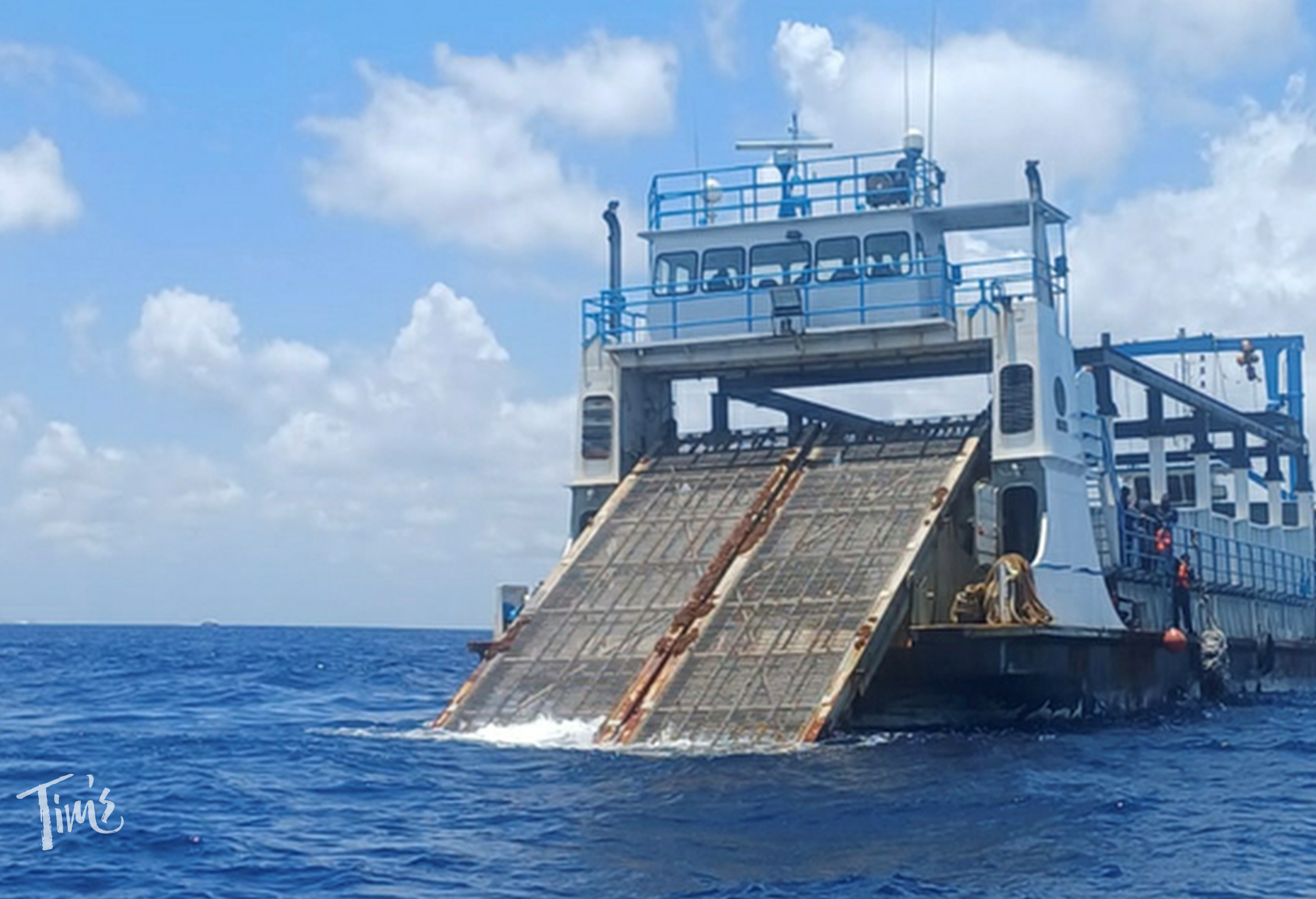
The federal government and Quintana Roo have expanded barriers, vessels, satellite monitoring, collection equipment, and offshore interception.
More than 2 billion Mexican pesos have been announced for the broader sargassum strategy.
The objective is increasingly focused on collecting sargassum offshore instead of waiting for it to decompose on beaches.
That distinction matters for tourism.
A year containing enormous offshore sargassum quantities does not necessarily produce equally poor conditions everywhere.
So, Should You Cancel a Cancun Vacation Because of Sargassum?
No decision should be based solely upon a statewide sargassum headline.
Instead, current conditions should be checked close to the travel date.
Look at the actual beach. Check recent photographs. Check webcams when available. Review Mexican Navy forecasts. Look at wind and current conditions.
Most importantly, check the specific part of Cancun where you will be staying.
Someone staying in a vacation rental Cancun property should be interested in conditions outside that property.
A report from Playa del Carmen or Tulum may have little relevance to that beach.
The Bottom Line About Cancun Sargassum in 2026
Yes, 2026 has been a major sargassum year.
Yes, more than 105,000 metric tons have reportedly been collected across Quintana Roo.
However, that statistic should not be interpreted as proof that every Cancun beach has experienced worse conditions than 2025.
Satellite measurements from the University of South Florida showed June 2026 basin-wide sargassum remained approximately 10% below 2025's historic record.
Meanwhile, shoreline impacts have varied considerably by location. For travelers, the Cancun sargassum forecast 2026 should be treated as a changing forecast rather than a fixed seasonal calendar.
The strengthening El Niño adds another changing factor for the remainder of 2026.
However, an early end to Cancun's sargassum season cannot currently be promised.
The most accurate answer remains remarkably simple:
Check the beach you are actually visiting.
At Tim's Ocean Condos, current beach conditions can be followed rather than guessed months in advance.
That approach provides travelers considering a vacation rental with something much more useful than another frightening headline.
It provides perspective.
And when it comes to sargassum in Cancun, location and timing matter enormously.